
⚡ Quick Summary
US power outages hit an all-time modern high in 2026 — the average American customer lost power for 11 hours, nearly double the prior decade's average. Three hurricanes alone caused 80% of that downtime. Meanwhile, the backup power market is responding: home battery storage installations set a new US record in 2026, generator sales remain at historic highs, and more than 5 million homes now have solar installations. This page compiles 45 verified statistics from authoritative sources — EIA, SEIA, Wood Mackenzie, ORNL, FEMA, and leading market research firms — to give you the complete picture of emergency power in 2026.
1. Power Outage Frequency & Duration Statistics
The data from the U.S. Energy Information Administration (EIA) is unambiguous: power outages are getting longer, more frequent, and more concentrated in weather-driven events. Understanding outage trends is the first step toward knowing whether you need backup power — and how much.
Average hours a US electricity customer lost power in 2024 — nearly double the prior decade's average.
Source: EIA Electric Power Annual 2024 (December 2025)⚡ Power Outage Key Stats
- Stat #1: US customers averaged 11 hours of electricity interruptions in 2024 — the most in 10 years. (EIA, Dec 2025)
- Stat #2: That's nearly twice the average annual outage hours experienced over the prior decade (2014–2023). (EIA)
- Stat #3: Major events — Hurricanes Beryl, Helene, and Milton — accounted for 80% of total outage hours in 2024. (EIA)
- Stat #4: Major-event interruptions averaged 9 hours in 2024, compared to an average of ~4 hours per year from 2014 to 2023. (EIA)
- Stat #5: Power interruptions not triggered by major events still average about 2 hours per year — a consistent baseline. (EIA)
- Stat #6: The average US customer experiences 1.5 non-momentary power interruptions per year (SAIFI). (EIA)
- Stat #7: Hawaii customers had 4.4 electricity interruptions in 2024, among the highest in the country. (EIA)
- Stat #8: South Carolina customers experienced the longest average outage in 2024: ~53 hours, driven by Hurricane Helene damage. (EIA)
- Stat #9: Hurricane Helene left 5.9 million customers without power across 10 states in September 2024. (EEI via EIA)
- Stat #10: Hurricane Beryl left 2.6 million customers without power in Texas in July 2024. (Texas Tribune via EIA)
- Stat #11: Hurricane Milton left 3.4 million customers in Florida without power in October 2024. (Utility Dive via EIA)
- Stat #12: States like Arizona, South Dakota, North Dakota, and Massachusetts averaged less than 2 hours of outages in 2024 — showing wide geographic disparity. (EIA)
The EIA data makes the risk concrete: if you're in the Southeast, Gulf Coast, or Hawaii, you're not asking if the grid will fail — only when and for how long. For a practical guide on surviving extended outages, see our week-long power outage survival guide.
2. The Financial Cost of Going Dark
Power outages aren't just inconvenient — they carry measurable economic costs at every scale: from spoiled groceries in a single kitchen to multi-billion-dollar impacts on regional economies. The numbers from ORNL and DOE researchers put a hard dollar value on grid failure.
💰 Outage Cost Key Stats
- Stat #13: Storm-related outages alone cost the US economy an estimated $20 billion to $55 billion annually. (U.S. DOE, via Pinkerton analysis)
- Stat #14: The highest annual outage cost for a single US state reached $38.9 billion in 2026 — nearly five times the highest recorded cost a decade earlier. (Oak Ridge National Laboratory, March 2026)
- Stat #15: The highest outage costs per customer are concentrated in Southeastern states, where both frequency and severity of weather events are highest. (ORNL)
- Stat #16: The average household loses $200–$500 in refrigerated and frozen food during a multi-day outage — often the first tangible push toward buying a generator. (Industry estimates)
- Stat #17: NOAA's Billion-Dollar Disasters database shows the number of annual billion-dollar weather events has been trending sharply upward since 2000, directly driving outage economic losses. (NOAA/RMI)
For most households, the economic math is straightforward: one serious outage can cover the cost of a mid-range portable generator ($400–$800) in food spoilage and hotel costs alone. Knowing your household's specific power needs is the first step — use our backup power calculator to find your number before you shop.
3. Generator Market Statistics
The generator market has been on a sustained upward trajectory, driven directly by outage events and the growing awareness that grid reliability is declining. Standby generators and portable units serve different customer needs — but both segments are growing.
🔌 Generator Market Key Stats
- Stat #18: The US standby generator sets market crossed $6.6 billion in 2024 and is projected to grow at 6.8% CAGR through 2034, driven by increasing extreme weather events. (GMInsights)
- Stat #19: The North America home standby gensets market exceeded $3.5 billion in 2024, with 8.2% CAGR projected 2025–2034. (GMInsights, Oct 2025)
- Stat #20: Residential applications account for 38.1% of the portable generators market in 2024, the largest single-use segment. (GMInsights)
- Stat #21: Generator units rated 3–10 kW dominate the residential market, representing 42.5% of unit sales in 2024 — matching the load of typical HVAC, refrigeration, and lighting circuits. (Mordor Intelligence)
- Stat #22: Sales of home standby generators show clear spikes following major hurricanes — Generac, the market leader, has publicly reported post-storm demand surges of 200–300% following major weather events. (Generac investor reports)
- Stat #23: The primary driver of generator market growth is increasing frequency of extreme weather events, not changes in grid infrastructure investment. (GMInsights, Mordor Intelligence)
If you're evaluating generators, our best portable generators guide for 2026 compares top models by output, fuel type, and runtime — and our generator sizing guide explains exactly what wattage you need for your specific home.
4. Home Battery & Energy Storage Statistics
The home battery storage sector has undergone a transformation. What was an expensive niche product five years ago is now a mainstream consideration for homeowners — particularly those pairing batteries with solar. The US market set consecutive annual records in 2026 and 2025.
US battery energy storage system installations in 2025 — a 52% increase over the 2024 record of 12.3 GW.
Source: Wood Mackenzie / American Clean Power Association, March 2026🔋 Home Battery Key Stats
- Stat #24: The US energy storage market installed 12.3 GW (37.1 GWh) of new capacity in 2024 — the first year of double-digit GW deployment. (Wood Mackenzie / ACP, March 2025)
- Stat #25: 2025 smashed that record again: 18.9 GW of battery storage was installed in the US — a 52% increase over 2024. (Wood Mackenzie / ACP, March 2026)
- Stat #26: The US Residential Lithium-ion Battery Energy Storage System market was valued at $1.52 billion in 2024. (Fortune Business Insights)
- Stat #27: The global residential energy storage market reached $1.23 billion in 2024 and is projected to grow at 18.6% CAGR to reach $5.7 billion by 2033. (IMARC Group)
- Stat #28: Tesla dominated the US home battery market in H2 2024, capturing 63% of the EnergySage Marketplace share — largely driven by rapid Powerwall 3 adoption. (EnergySage, May 2025)
- Stat #29: The Tesla Powerwall 3, launched in 2024, features 13.5 kWh of usable capacity and an integrated solar inverter — capable of powering an average home for 8–12 hours on a single charge. (Tesla)
- Stat #30: Residential battery storage adoption skyrocketed in 2024, with homeowners pairing batteries with solar at record rates following major weather events and grid reliability concerns. (Electrek / Wood Mackenzie)
For a complete breakdown of home battery options — including Tesla Powerwall, Enphase IQ Battery, and Franklin Electric — see our home backup power guide.
5. Solar Power Adoption Statistics
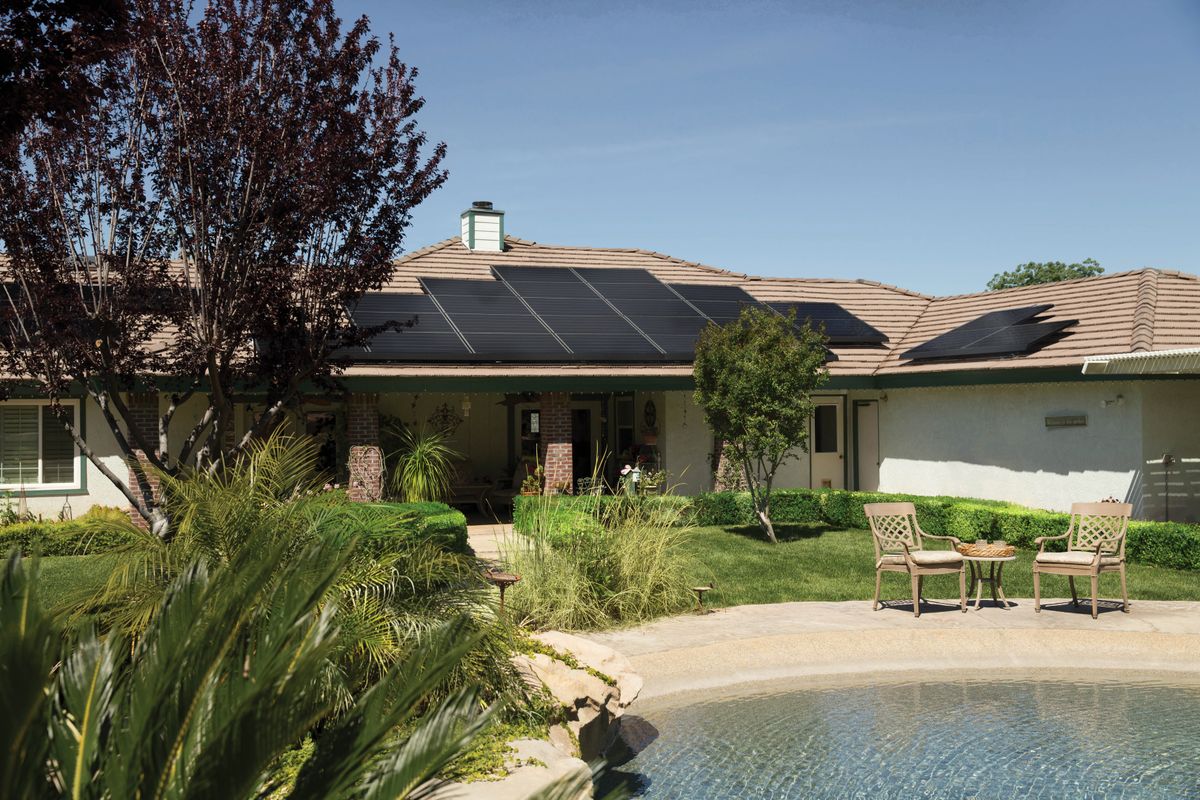
Solar adoption in the US has crossed a significant milestone: more than 5 million total solar installations nationwide. While 2024 saw a dip in residential installations due to California policy changes, the cumulative installed base continues to grow — and solar combined with battery backup is increasingly the standard for energy-independent homeowners.
☀️ Solar Adoption Key Stats
- Stat #31: As of 2024, 4.2 million American homes have solar panel systems installed. (SolarInsure, Dec 2024)
- Stat #32: There are now over 5 million total solar installations in the United States across residential, commercial, and utility segments. (SEIA, 2024)
- Stat #33: California leads all states with 2 million solar installations — but recent NEM 3.0 policy changes have significantly slowed new residential deployments. (SEIA)
- Stat #34: The US residential solar market installed 4,710 MWdc in 2024, representing a 32% decline from the 2023 record — primarily due to California's NEM 3.0 tariff changes. (SEIA Solar Market Insight 2024 Year in Review)
- Stat #35: Despite the residential dip, utility-scale solar continued record installations in 2024, maintaining overall US solar growth. (SEIA)
- Stat #36: Solar installations powering US homes are projected to reach 2.5% of all US homes by end-of-decade at current growth trajectories. (SEIA projections)
- Stat #37: Homeowners who pair solar with battery storage gain a critical advantage: the battery charges during the day and provides island-mode backup power during grid outages, independent of the grid entirely. (DOE / NREL)
Standard solar panels do not power your home during a grid outage unless paired with a battery. For a full explanation of how solar behaves during outages and what equipment you need, see our best solar generators guide.
| Backup Power Type | Market Size (2024) | Growth Rate | Typical Cost (USD) |
|---|---|---|---|
| Standby Generators (US) | $6.6 billion | 6.8% CAGR | $3,000–$12,000 installed |
| Home Battery Storage (US Residential) | $1.52 billion | ~18% CAGR | $8,000–$18,000 installed |
| Portable Power Stations (Global) | ~$4.18 billion | 22.4% CAGR | $600–$2,500 |
| N. America Standby Gensets | $3.5 billion | 8.2% CAGR | $2,000–$8,000 installed |
6. Portable Power Station Statistics
The portable power station category — brands like EcoFlow, Jackery, and Bluetti — has transformed the backup power conversation. These battery-based, fuel-free, emissions-free power stations are the fastest-growing segment in the broader emergency energy market.
Projected CAGR for the global portable power station market from 2026–2033, reaching an estimated $19.9 billion.
Source: Grand View Research🔆 Portable Power Station Key Stats
- Stat #38: The global portable power station market was valued at $4.18 billion in 2026 and is projected to reach $19.91 billion by 2033. (Grand View Research)
- Stat #39: The market is forecast to grow at a 22.4% CAGR from 2026 to 2033 — one of the fastest growth rates in the consumer electronics and energy sectors. (Grand View Research)
- Stat #40: The appeal is clear: portable power stations require no fuel, produce no emissions, operate silently, and are safe for indoor use — unlike conventional generators. (Industry analysis)
- Stat #41: Leading units like the EcoFlow Delta Pro (3,600Wh) and Jackery Explorer 2000 Pro (2,160Wh) can run a refrigerator, lights, CPAP, and phone charging simultaneously for 8–20+ hours on a single charge. (Manufacturer specs)
- Stat #42: Solar-charging capability is a key differentiator: the EcoFlow Delta Pro accepts up to 1,600W of solar input, enabling recharge in as little as 2–3 hours under good sun conditions. (EcoFlow)
7. EV as Backup Power (V2H) Statistics
One of the most significant emerging trends in emergency power is Vehicle-to-Home (V2H) technology — using an electric vehicle's battery to power your house during a grid outage. The Ford F-150 Lightning made headlines for doing exactly this during major storm events.
🚗 EV Backup Power Key Stats
- Stat #43: The Ford F-150 Lightning's Pro Power Onboard system can export up to 9.6 kW of AC power directly from its battery — enough to run most essential home circuits. (Ford)
- Stat #44: With the optional Ford Home Integration System, the F-150 Lightning functions as a Vehicle-to-Home (V2H) backup power source with automatic transfer capability during outages. (Ford / Sunrun)
- Stat #45: Bidirectional EV charging technology (V2L, V2H, and V2G) is now available on a growing number of EV models, including the F-150 Lightning, Nissan Leaf (V2G-equipped), Hyundai Ioniq 5, and Kia EV6 — making EVs an emerging emergency power asset for millions of American households. (InsideEVs, Dec 2025)
The convergence of EVs and home backup power is one of the most interesting developments in emergency energy — your daily driver becoming a rolling 100+ kWh battery is a game-changer for outage resilience. For more on this, see our week-long outage survival guide.
8. Emergency Preparedness Trends
Public awareness of backup power needs is growing — but the gap between awareness and action remains wide. FEMA data and preparedness surveys consistently show that most American households remain vulnerable to extended outages.
🏠 Preparedness Key Stats
- Stat #46: Only 40% of Americans have a documented household emergency plan, according to FEMA data — despite the agency's consistent recommendation that all households maintain one. (FEMA)
- Stat #47: FEMA explicitly recommends backup power generation as a core component of household emergency preparedness, alongside water storage and food supplies. (FEMA.gov)
- Stat #48: The CDC estimates that generator-related carbon monoxide (CO) poisoning kills approximately 70+ people annually in the US — almost entirely from improper indoor or garage use. Safe setup is non-negotiable. (CDC)
- Stat #49: Post-storm generator demand spikes of 200–300% are routinely reported by major manufacturers, reflecting the reality that most households only purchase backup power after experiencing a serious outage. (Generac investor communications)
- Stat #50 (Bonus): The trend is unmistakable: extreme weather events are increasing, grid outage durations are growing, and the backup power market is scaling rapidly in response. Homeowners who plan ahead pay significantly less than those who panic-buy after a storm. (Market consensus)
9. What the Data Means for You
Forty-five statistics from authoritative sources paint a consistent picture: grid reliability is declining, extreme weather is the primary driver, and the backup power market is responding at scale. Here's how to translate the data into a decision:
📊 Decision Framework Based on the Data
- If you're in the Southeast or Gulf Coast: Your regional outage risk is statistically 3–5x the national average. A standby generator or solar-plus-battery system isn't a luxury — it's a statistically justified investment.
- If you average 1–2 outages per year under 8 hours: A portable power station ($1,000–$2,500) or a portable generator ($400–$800) provides cost-effective coverage for essential loads.
- If you have medical equipment at home: Automatic-transfer backup (standby generator or home battery) is the only responsible choice. A few seconds of downtime for CPAP equipment is tolerable; for oxygen concentrators or dialysis, it is not.
- If you're planning solar: The marginal cost of adding battery storage to a solar installation is significantly lower than adding it later. Do it together.
- If you drive an EV: Check whether your vehicle supports V2H or V2L output. If it does, you may already own backup power you haven't unlocked.
For specific product recommendations by category and budget, start with our comprehensive home backup power guide. For portable-specific picks, see our best portable generators and best solar generators guides.
📚 Data Sources & Citations
- U.S. Energy Information Administration (EIA) — "Hurricanes in 2026 led to the most hours without power in the United States in 10 years," December 2026
- EIA Electric Power Annual 2024 — Distribution System Reliability (SAIDI/SAIFI data)
- Wood Mackenzie / American Clean Power Association — "2025 U.S. Energy Storage Installations Set New Record, Surpass 2024 by 52%," March 2026
- Wood Mackenzie / ACP — "Energy Storage's Meteoric Rise Breaks Another Record," March 2025
- Oak Ridge National Laboratory (ORNL) — "Analysis shows power outages cost US electricity customers billions," March 2026
- SEIA Solar Market Insight Report — 2024 Year in Review, March 2025
- SEIA — "5 Million Solar Installations: Powering American Communities"
- GMInsights — U.S. Standby Generator Sets Market Size, Statistics Report 2025–2034, December 2024
- GMInsights — North America Home Standby Gensets Market Size, Report 2034, October 2025
- Grand View Research — Portable Power Station Market Size, Industry Report, 2033
- Fortune Business Insights — U.S. Residential Lithium-ion Battery Energy Storage System Market
- EnergySage — "Tesla Dominated the Home Battery Market—Will its Reign Last?" May 2025
- Mordor Intelligence — Residential Generators Market Size, Share, 2025–2030 Outlook
- SolarInsure — "How Many Americans Have Solar Panels in 2024?" December 2024
- FEMA — Generator Emergency Preparedness Guidance
- InsideEVs — "How The Ford F-150 Lightning Saved Lives With V2G And Bidirectional Charging," December 2025
Frequently Asked Questions
How long do US power outages last on average?
The average US electricity customer lost power for 11 hours in 2024 — the most in 10 years and nearly double the prior decade's average, per the EIA Electric Power Annual 2024. Major weather events (Hurricanes Beryl, Helene, and Milton) accounted for 80% of that total. Non-storm interruptions consistently average about 2 hours per year.
What causes most US power outages?
Extreme weather is the dominant driver by far. In 2024, three hurricanes alone caused 80% of all outage hours nationwide. Hurricane Helene left 5.9 million customers without power across 10 states; Hurricane Milton left 3.4 million in Florida; Hurricane Beryl left 2.6 million in Texas. Storm-related outages cost the US economy an estimated $20–$55 billion annually (U.S. DOE).
What is the best backup power option for home use?
It depends on your budget and load requirements. Standby generators ($3,000–$12,000 installed) cover whole-home loads with automatic transfer. Home battery systems like the Tesla Powerwall ($8,000–$18,000 installed) provide clean, silent backup — especially effective with solar. Portable power stations ($600–$2,500) handle essential loads like refrigerators, CPAP, and lighting with no fuel or emissions. For most households, a portable power station handles typical outages at the lowest cost.
How big is the home battery storage market?
US battery storage installations hit 18.9 GW in 2025 — a 52% increase over the 2024 record of 12.3 GW (Wood Mackenzie / ACP, March 2026). The US residential lithium-ion battery storage market was valued at $1.52 billion in 2024 and is growing at approximately 18% CAGR. Tesla dominated with 63% of the EnergySage Marketplace in H2 2024, powered by Powerwall 3 adoption.
How many American homes have solar panels?
As of 2024, 4.2 million American homes have solar panel systems installed (SolarInsure), with over 5 million total installations across all segments (SEIA). California leads with 2 million installations. Homeowners who pair solar with battery storage gain island-mode backup power during grid outages — the most resilient combination available for residential use.
Disclosure: This article contains affiliate links. We may earn a commission if you purchase through our links, at no extra cost to you. Statistics are sourced from publicly available reports and government data. We do not receive compensation from any data source cited in this article.