
If you're buying a standby generator for your Ontario home, fuel choice is often determined by your location and existing infrastructure. But understanding the tradeoffs matters — especially for rural homeowners where the "obvious" choice isn't always the best one, and for anyone concerned about fuel availability during a prolonged, region-wide outage.
Natural Gas: The Urban/Suburban Default
Natural gas is the preferred fuel for Ontario standby generators in areas with Enbridge Gas service — which covers most of urban and suburban Ontario. The advantages are compelling:
- No storage required: The generator connects directly to your home gas line. No tank, no delivery scheduling, no running out of fuel.
- Lower cost per BTU: At current Ontario rates, natural gas costs roughly 40–50% less per equivalent energy unit than propane.
- Continuous supply: For typical outages (hours to a few days), the Enbridge gas network remains operational regardless of what's happening to the electric grid.
- Simpler installation: No tank pad, no setback compliance, no fill truck access planning.
The one meaningful risk: natural gas pressure depends on Enbridge Gas compression stations, which require electricity to operate at full capacity. During extended, widespread grid failures affecting large regions, gas pressure can theoretically drop. This is rare in Ontario's history but not impossible during extreme events.
Propane: The Rural Independence Option
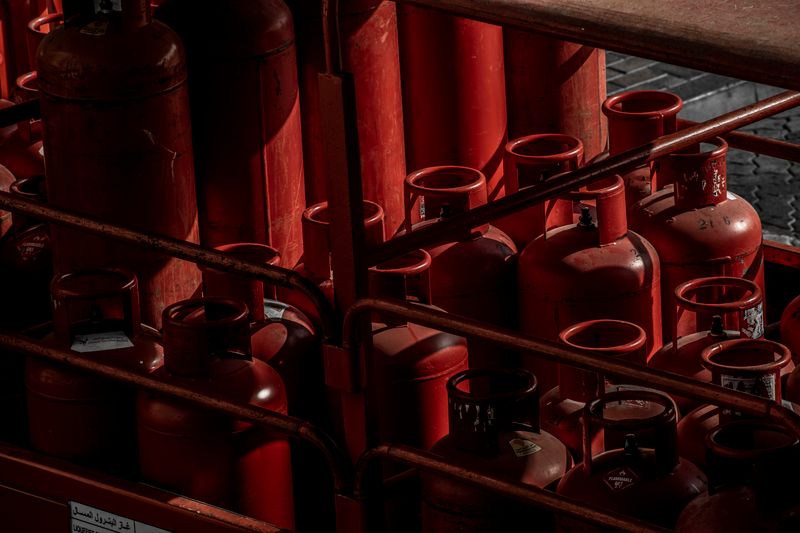
For Ontario properties without natural gas service — a large portion of Eastern Ontario, cottage country, and rural communities — propane is the only viable standby generator fuel. But even for properties that could access natural gas, propane has genuine advantages worth considering:
- Complete fuel independence: A full 500-gallon tank means you have a known, fixed fuel supply that doesn't depend on any utility. In a worst-case scenario (extended grid failure, supply chain disruption), your stored propane remains yours.
- Cold start reliability: Propane vaporizes readily down to -42°C. Natural gas performs similarly, but propane's stored-on-site nature means you're not dependent on pipeline pressure during extreme cold events.
- Dual-use applications: On many rural Ontario properties, the propane tank already serves the home heating system, water heater, and cooking appliances. Adding the generator to the same tank is a natural extension.
The downside: propane costs roughly 2x natural gas per equivalent BTU in Ontario, and requires a tank (minimum 500-gallon for a standby generator) with associated rental or purchase costs ($500–$1,500 for the tank, $150–$300/year rental), plus fill truck access to your property.
Fuel Cost Comparison: Running a 22kW Generator
| Fuel | Cost per unit | Consumption at 50% load | Hourly fuel cost | 24-hour cost |
|---|---|---|---|---|
| Natural gas | ~$0.039/m³ (Ontario avg) | ~2.8 m³/hr at 50% load | ~$0.11/hr | ~$2.60 |
| Propane | ~$0.75–$0.90/L (Ontario) | ~3.6L/hr at 50% load | ~$2.70–$3.24/hr | ~$65–$78 |
For a typical 3-day Ontario outage at 50% load, natural gas costs ~$7–8 CAD in fuel. The same outage on propane costs ~$200–235 CAD. For extended outages, this cost differential becomes significant — though most homeowners would gladly pay $200 in propane to keep a house warm and functional through a major winter storm.
Propane Tank Sizing for Ontario Winters
For a generator-only application (not shared with home heating), a 500-gallon (1,893L) propane tank provides 340+ hours at 50% load — well over two weeks of continuous operation. This covers any realistic outage scenario in Ontario. If the propane tank also serves your heating system, size up to 1,000 gallons to avoid running low during an extended winter outage where both the heating system and generator are drawing from the same tank simultaneously.
Natural Resources Canada's home energy guide for Canadian climates recommends calculating propane storage based on combined peak demand across all appliances to avoid supply interruptions during extended cold snaps.
Installation Considerations in Ontario
Both natural gas and propane standby generators require the same ESA permits and licensed electrical contractor for the electrical connection and automatic transfer switch. The fuel supply side differs:
- Natural gas: A licensed gas fitter connects the generator to your existing line. If the generator is far from the existing gas line, a new gas line extension adds $500–$2,000 to the installation cost.
- Propane: Tank setback rules in Ontario require a minimum 3 metres from the building (larger tanks require more clearance). The tank provider installs and regulates the tank; a licensed gas fitter makes the final connection to the generator.
For the full picture on standby generator selection and costs, see our Generac vs Kohler comparison and our complete Ontario home backup power guide. If you're still deciding between a standby generator and a battery system, our whole-house battery backup guide covers that comparison in detail.
Frequently Asked Questions
Related Resources
- Emergency preparedness guides and survival tips Power is one piece — see the full preparedness picture.
Is propane or natural gas better for a standby generator in Ontario?
Natural gas is preferred for urban and suburban Ontario homeowners with existing gas service — it's cheaper per equivalent BTU, requires no storage tank, and is supplied continuously without refilling. Propane is the only option for rural properties without natural gas lines, and has the advantage of stored on-site supply that doesn't depend on gas utility infrastructure during a prolonged outage.
How much propane does a standby generator use per hour?
A Generac 22kW standby generator uses approximately 3.6 litres of propane per hour at 50% load, or about 5.5 litres per hour at full load. A standard 500-gallon (1,893L) propane tank provides roughly 344 hours at 50% load — over two weeks of continuous operation. Most Ontario homeowners with 500-gallon tanks have no practical runtime concern for typical outages.
Can natural gas fail during a power outage?
Natural gas pressure in Ontario is maintained by electrically-powered compression stations. While the gas distribution network has redundancy and usually stays operational during power outages, there are scenarios — particularly widespread, extended grid failures — where gas pressure can drop or be interrupted. Propane stored on-site is fully independent of both the electric grid and gas utility infrastructure.
What size propane tank do I need for a standby generator in Ontario?
For a 22kW standby generator, a 500-gallon (1,893L) propane tank is the standard recommendation for most Ontario homes. This provides 2+ weeks of continuous operation at 50% load. If the generator also supplies your home heating, a 1,000-gallon tank is more appropriate for extended winter outages.
Recommended Products
Get weekly guides from EmergencyEnergy
No spam. Unsubscribe anytime.